Off the beaten path · Hokkaido to Kyushu by train and bus
Japan Off the Beaten Path: 9 Quieter Places by Train and Bus
Nine places off Japan's Tokyo-Kyoto-Osaka route you can reach without a car, with 2026 hours, fees, nearest stations and the last leg from each.
Most first trips to Japan follow the same line: Tokyo, Kyoto, Osaka, perhaps Hiroshima. Take one more train or bus beyond it and the country slows down. You can climb to a cliffside temple above a farming valley in Yamagata, walk the main street of an old silver-mining town in Shimane, or stand under Japan's tallest single-drop waterfall in the forests of Wakayama. None of them needs a car.
This guide picks nine of those places, the kind of hidden gems most short trips miss, spread from Hokkaido to southern Kyushu. For each one you get the nearest station, the bus or walk from it, and current hours and fees, taken from official websites, transport operators and tourism offices and checked on 5 November 2026. The last section shows how to find more in Michiplan's Explore, which covers all 47 prefectures and gives the nearest station or bus stop for every place.
Key Takeaways
- All nine places below can be reached by public transport, though several depend on a bus that runs only every hour or so.
- Two need checking before you go: Matsumae Castle is open until 10 December, then closed until 10 April; and Uchiko-za, the old kabuki theatre in Uchiko, is shut for repairs until about spring 2029.
- Prices have gone up at several places. Yamadera now charges ¥500 and Matsue Castle ¥1,200, so older guides quote fees that are too low.
- Explore in Michiplan shows each place's nearest station or stop and the walk from it, and filters by area, by famous list (such as the 100 Fine Castles) and by whether a car is needed.
Nine quieter places at a glance
"Off the beaten path" here means off the main Tokyo-Kyoto-Osaka route, not unknown: some of these are famous inside Japan. What they share is a last leg by local train or bus that the usual circuit skips.
| Place | Prefecture | Nearest station | Last leg | Adult entry |
|---|---|---|---|---|
| Yamadera (Risshaku-ji) | Yamagata | JR Yamadera | About 7 min on foot | ¥500 |
| Matsumae Castle | Hokkaido | JR Kikonai | Bus, about 90 min | ¥360 |
| Gujō Hachiman | Gifu | Gujō-Hachiman (Nagaragawa Railway) | Town bus, or Gifu Bus from Gifu (1 h 27 min) | Castle ¥400 |
| Nachi Falls | Wakayama | JR Kii-Katsuura | Bus, about 24 min | Platform ¥500 |
| Matsue Castle | Shimane | JR Matsue | Bus, 10 min | ¥1,200 |
| Iwami Ginzan | Shimane | JR Ōdashi-shi | Bus, about 26 min | Mine shaft ¥500 |
| Ōzu and Uchiko | Ehime | JR Iyo-Ōzu, JR Uchiko | Ōzu: bus, 10 min, then 5 min on foot | Castle ¥550 |
| Usuki Stone Buddhas | Ōita | JR Usuki | Bus, about 20 min | ¥550 |
| Obi | Miyazaki | JR Obi | About 15 min on foot | ¥800 for six sights |
Sources for each row are in the sections below.
Yamadera, Yamagata: 1,015 steps above the valley
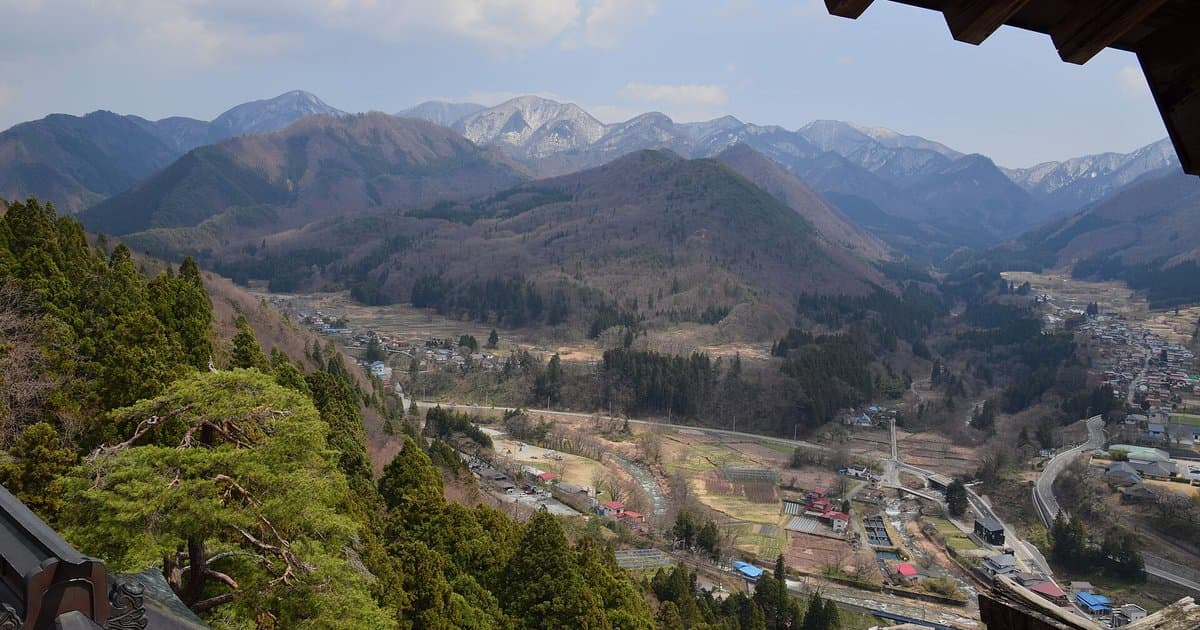
Yamadera is a temple of the Tendai school built up a cliff, and the climb is the point. A stone stairway of 1,015 steps runs from the Konpon-chūdō hall to the Okunoin at the top, passing small halls on the way up. The Godaidō, a wooden hall on a ledge near the top, looks straight down the valley; its view is the photo at the top of this guide (Risshaku-ji; Visit Yamagata).
- Hours: 8:00 to 16:00 from April to September, 8:00 to 15:30 in October and November, and 8:30 to 15:00 from December to March. In winter the temple can close earlier in bad weather (Risshaku-ji).
- Fee: ¥500 for adults and ¥200 for children, cash only. Some English pages still give the old ¥300 (Yamadera Tourism Association).
- Getting there: JR Senzan Line to Yamadera Station, about 20 minutes from Yamagata and about 50 from Sendai, then a 7-minute walk to the entrance (Yamadera Tourism Association, access).
With the gate shutting at 15:30 in autumn, Yamadera is best done in the morning, with time left for the climb back down. You'll find it among the places of Tohoku in Explore.
Matsumae Castle, Hokkaido: Japan's northernmost castle
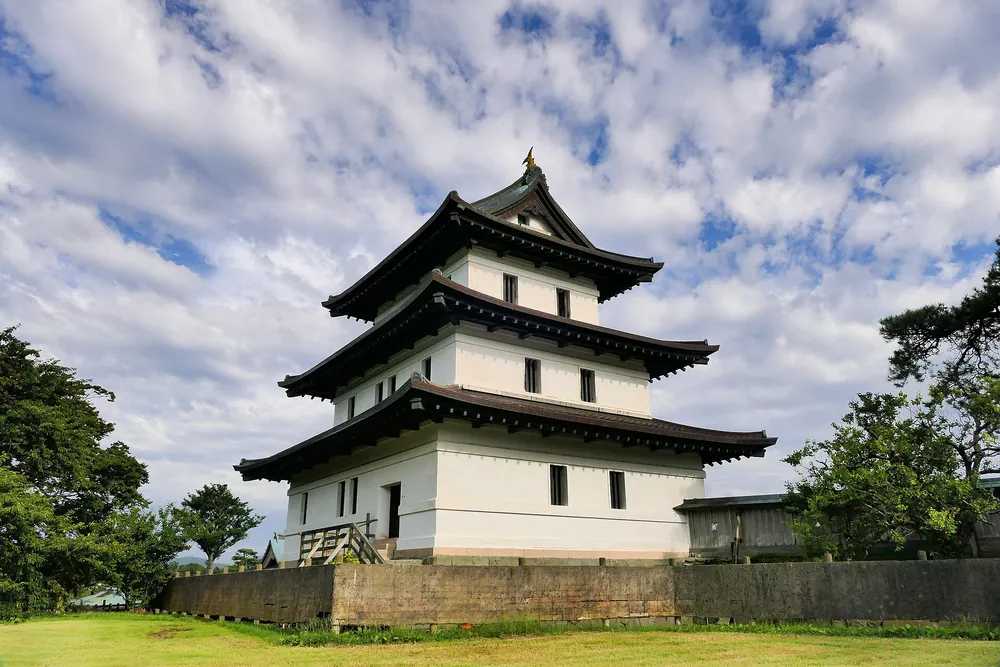
Matsumae Castle stands at the southern tip of Hokkaido. It was the last Japanese-style castle built in the Edo period, and it is still the northernmost. The keep you see today is a reconstruction that holds a museum (Hokkaido Tourism Organization).
- Season and hours: open every day from 10 April to 10 December, 9:00 to 17:00 with last entry at 16:30; closed through the winter (Hokkaido Tourism Organization; Matsumae Tourism Association).
- Fee: ¥360 for adults, ¥240 for junior high school students and younger (Matsumae Tourism Association).
- Getting there: Hakodate Bus runs 8 to 10 buses a day from Kikonai Station, a stop on the Hokkaido Shinkansen; the ride takes about 90 to 95 minutes. Three buses a day also run direct from Hakodate Station (JNTO, Matsumae; JNTO, Matsumae Park).
This is the longest last leg in the guide, so check the return bus before you set out. If you are coming this autumn, the last day of the season is 10 December. The castle is one of Hokkaido's entries on the 100 Fine Castles list, where it shows a bus stop three minutes' walk from the gate. For a gentler first look at Hokkaido, our five days in Sapporo and Otaru keeps to places on the rail line.
Gujō Hachiman, Gifu: a town built around its water
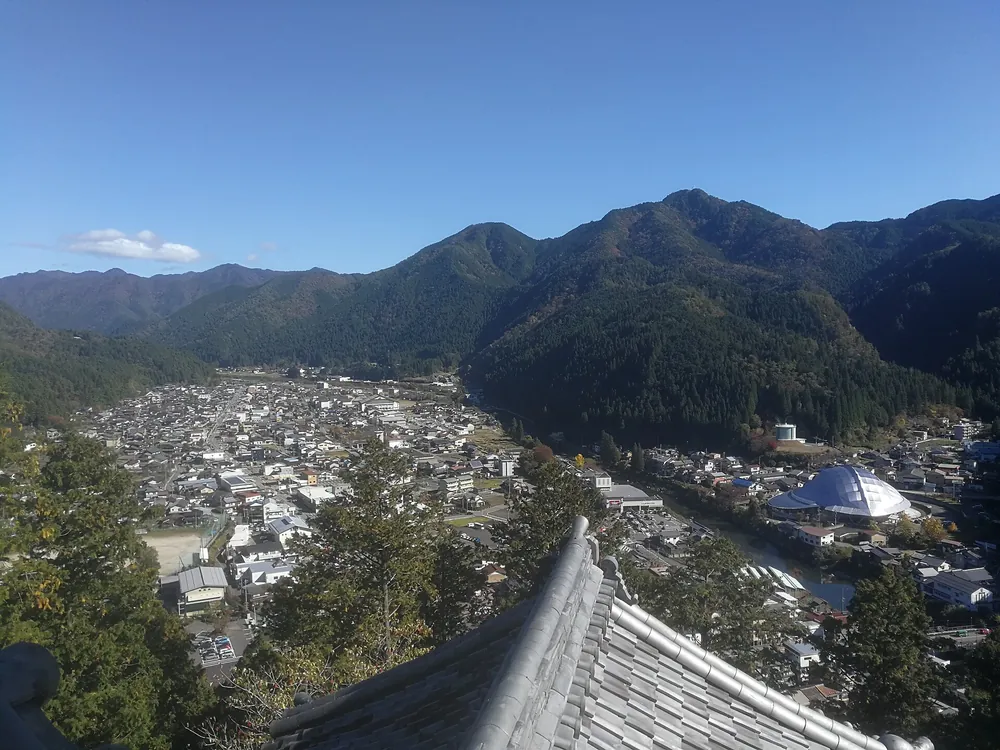
Gujō Hachiman is a castle town in the mountains of Gifu, laced with channels and springs. Its best-known spring, Sōgi-sui, is on Japan's Selected 100 Exquisite Waters. The town's summer dance, the Gujō Odori, runs for about 30 nights and is a designated Important Intangible Folk Cultural Property (Ministry of the Environment). Above the town, Gujō Hachiman Castle was rebuilt in wood in 1933 (Gujō Hachiman Industry Promotion Foundation).
- Castle hours: 9:00 to 16:30 from November to February, 9:00 to 17:00 in spring and autumn, and 8:00 to 18:00 in summer. Closed 20 December to 10 January (Gujō Hachiman Castle).
- Castle fee: ¥400 for adults. Sōgi-sui is a spring in the street and free to visit.
- This autumn: the castle's maple festival runs until 29 November 2026, with the grounds lit and open until 20:00 from 13 to 23 November (Gujō Hachiman Castle).
- Gujō Odori: usually from mid-July to early September, with dancing all night from 13 to 16 August (Gifu Prefecture tourism).
- Getting there: Gifu Bus runs from Gifu Station to Gujō Hachiman in about 1 hour 27 minutes for ¥1,800, with no booking needed. By rail, the Nagaragawa Railway takes about 80 minutes from Mino-Ōta (Gifu Bus; Gujō Hachiman, by rail).
Gujō Hachiman also sits on the way to Takayama. Nōhi Bus services from Nagoya and from Kyoto and Osaka to Takayama stop at the Gujō Hachiman interchange, a short taxi ride from town (Gujō Hachiman, by bus). That makes it an easy overnight stop before our five-day Takayama, Shirakawa-go and Kanazawa plan. Gujō City publishes its town-bus timetable as open data, so Michiplan uses the actual departure times for the town bus. Despite its fame in Japan, Sōgi-sui carries a "Little known" label in Explore, where it appears on the 100 Exquisite Waters of Chubu.
Nachi Falls, Wakayama: 133 metres in one drop
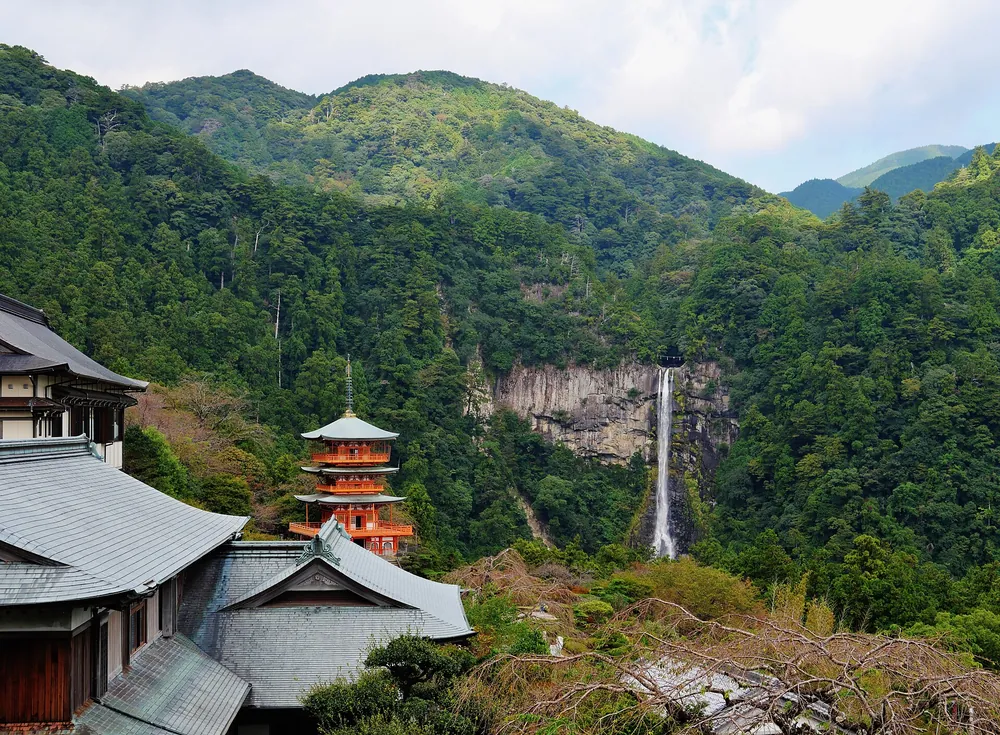
Nachi Falls drops 133 metres, and Wakayama Prefecture names it Japan's tallest single-drop waterfall. The waterfall itself is worshipped as the deity of Hirō-jinja, the shrine at its foot, and it stands near Kumano Nachi Taisha and the vermilion pagoda of Seiganto-ji, all part of the Kii Mountains World Heritage site (Wakayama Prefecture; Kumano Nachi Taisha).
- Fee: the viewing platform at the foot of the falls costs ¥500 for adults and ¥200 for children of school age. Seeing the falls from the path is free (Kumano Nachi Taisha).
- Getting there: Kumano Gobo Nankai Bus from Kii-Katsuura Station takes about 24 minutes to Nachi-no-Taki-mae, the stop for the falls, and 25 minutes to Nachisan. A single fare is ¥630. The company has applied to raise it to ¥700 from 25 February 2027 (Kumano Gobo Nankai Bus; 2023 fares; fare application, 21 October 2026).
- From Osaka: the limited express Kuroshio takes a little over four hours from Shin-Osaka to Kii-Katsuura (JR West).
Four hours each way makes Nachi a place to stay the night, in Katsuura or near the Kumano shrines, rather than a day trip from Osaka. Michiplan takes the Nachisan bus times straight from the operator's published timetable. In Explore, the falls are on Japan's Top 100 Waterfalls in Kansai.
Matsue Castle, Shimane: an original keep by Lake Shinji
Matsue lies in San'in, the Sea of Japan coast of western Honshu, where no Shinkansen runs. Its castle is one of the few in Japan whose keep has survived from the feudal era, and the keep was named a National Treasure in 2015 (Visit Matsue).
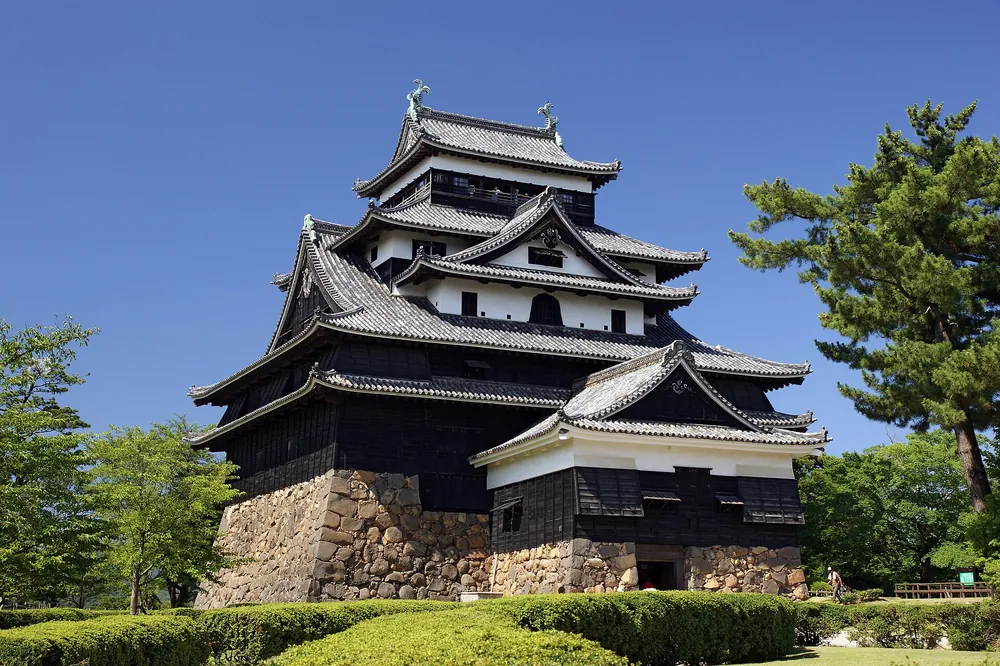
- Hours: the keep is open 8:30 to 17:00 from October to March and 8:30 to 18:00 from April to September, with last entry half an hour before closing. The grounds are free. Open every day (Matsue Castle).
- Fee: ¥1,200 for adults since 1 July 2026, raised to pay for repairs to the keep. Children enter free (Matsue Castle).
- Getting there: the Lake Line bus leaves Matsue Station every 30 minutes from 9:00 and takes 10 minutes; a ride costs ¥250 and a day pass ¥700 (Matsue City Transport, timetable; fares from April 2026). From Okayama, the limited express Yakumo takes about 2 hours 45 minutes (JR West).
- By boat: the Horikawa boats circle the castle moat in about 50 minutes, all year; a day pass costs ¥1,600 (Horikawa Sightseeing Boat).
Matsue Castle is on the 100 Fine Castles list in Chugoku, along with Tsuwano and Hagi further west.
Iwami Ginzan, Shimane: a silver-mining town without cars
Iwami Ginzan was a silver mine from the 16th century to the 20th, and it has been a World Heritage site since 2007 (UNESCO). Ōmori, the old mining town, is one long street of wooden houses, and cars are restricted: you park outside, then walk, cycle or take the bus in (Ōda City Tourism Association).
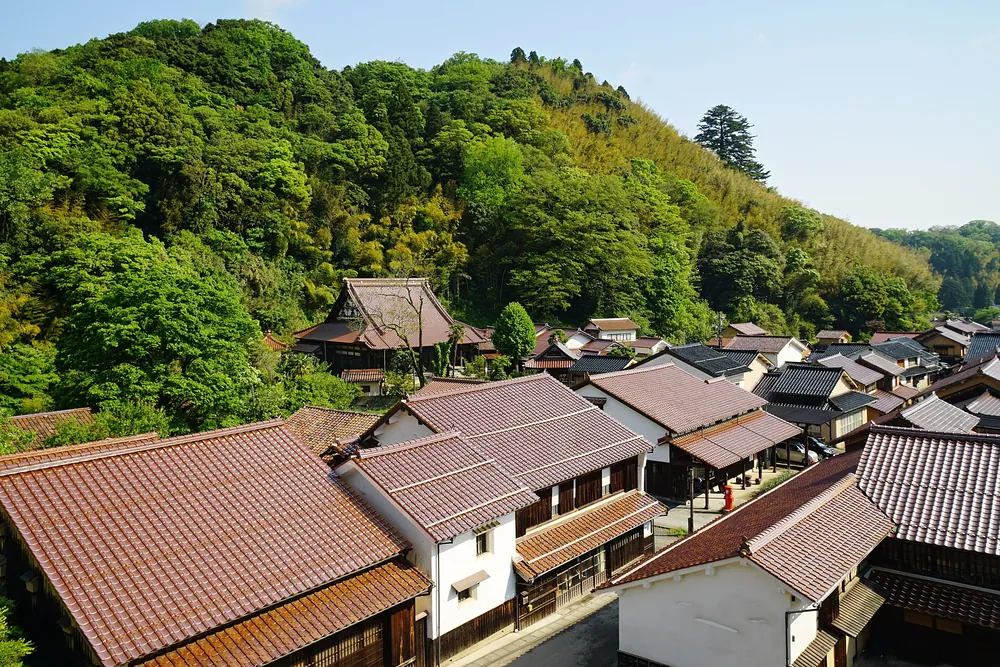
- Ryūgenji Mabu: the only mine shaft open all year, with about 160 metres of it open to walk. Open 9:00 to 17:00, and to 16:00 from December to February; ¥500 for adults. On 11 November 2026 it opens late, at 11:00, because of lighting repairs (Iwami Ginzan Mirai Consortium).
- The walk: the shaft is 1.2 km on foot from the Kiyomizudera-mae rest area, so allow half a day for the town and the mine (Ōda City Tourism Association).
- Getting there: Iwami Kōtsū buses from JR Ōdashi-shi Station reach Ōmori Daikansho-ato in 26 minutes; the city's 2024 timetable lists about 14 departures on weekdays, fewer at weekends (Ōda City Tourism Association, bus timetable).
- From Hiroshima: the Iwami Ginzan-go highway bus has two operators, each running one round trip a day (Hiroshima City).
That bus lets you add Iwami Ginzan to two days in Hiroshima and Miyajima, with a night in Ōda or Ōmori. In Explore it is among the World Heritage sites of Chugoku, shown two minutes' walk from the Ōmori bus stop.
Ōzu and Uchiko, Ehime: a wooden keep and an old theatre town
Ōzu Castle looks over the Hiji River in western Shikoku. Its keep was rebuilt in wood in 2004, true to its original form, rather than in concrete as many rebuilt keeps were (Ōzu Castle; Visit Ehime). Below it, Garyū Sansō is a Meiji-era villa on the riverbank that took craftsmen about ten years to build (Visit Ehime).
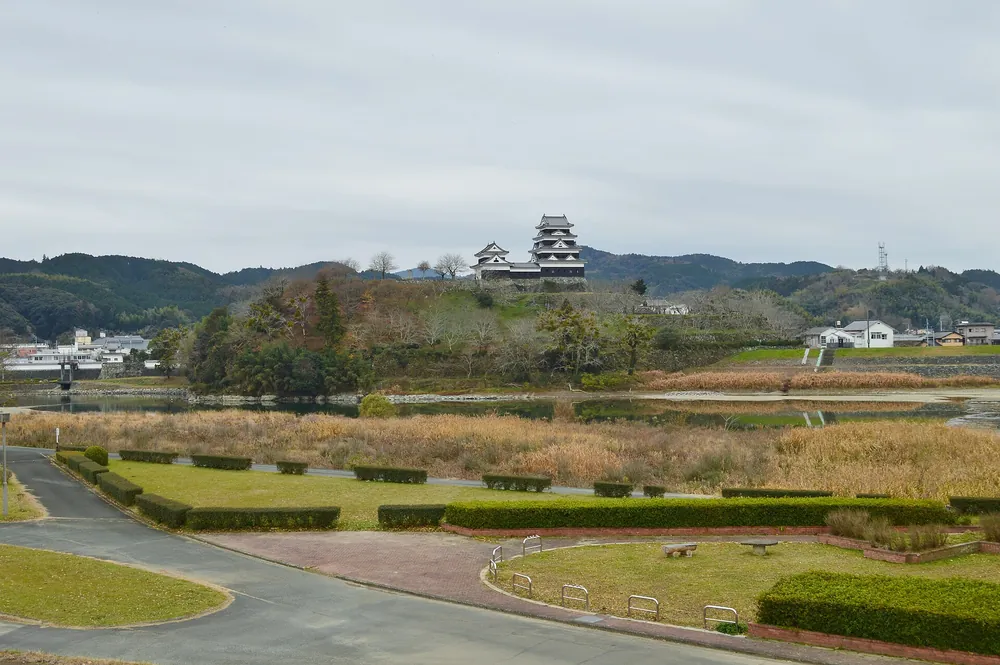
- Hours and fees: 9:00 to 17:00, last entry 16:30, every day. ¥550 for adults, or ¥880 with Garyū Sansō (Ōzu Castle).
- Getting there: from JR Iyo-Ōzu Station, the town bus takes about 10 minutes to Ōzu-jō-mae, then it is a 5-minute walk. A taxi takes about 10 minutes, and walking all the way takes about 30 (Ōzu Castle).
Uchiko is a short ride back towards Matsuyama, 25 minutes from Matsuyama by the Uwakai limited express (Uchiko tourism association). The town's theatre, Uchiko-za, was built in 1916 for kabuki and bunraku, but it has been closed for preservation work since September 2024 and is due to reopen in about spring 2029 (JNTO). The backstage rooms stay open with exhibits in the meantime (Uchiko Town). Back in Ōzu, the castle is on the 100 Fine Castles list in Shikoku, along with Uwajima Castle further south.
Usuki Stone Buddhas, Ōita: carvings in the rock
The Usuki Stone Buddhas are figures carved into soft rock in the hills outside Usuki, and they became a National Treasure in 1995 (Usuki City). Usuki is south of Ōita, the city next to Beppu, so the Buddhas make an easy day out from the hot springs.
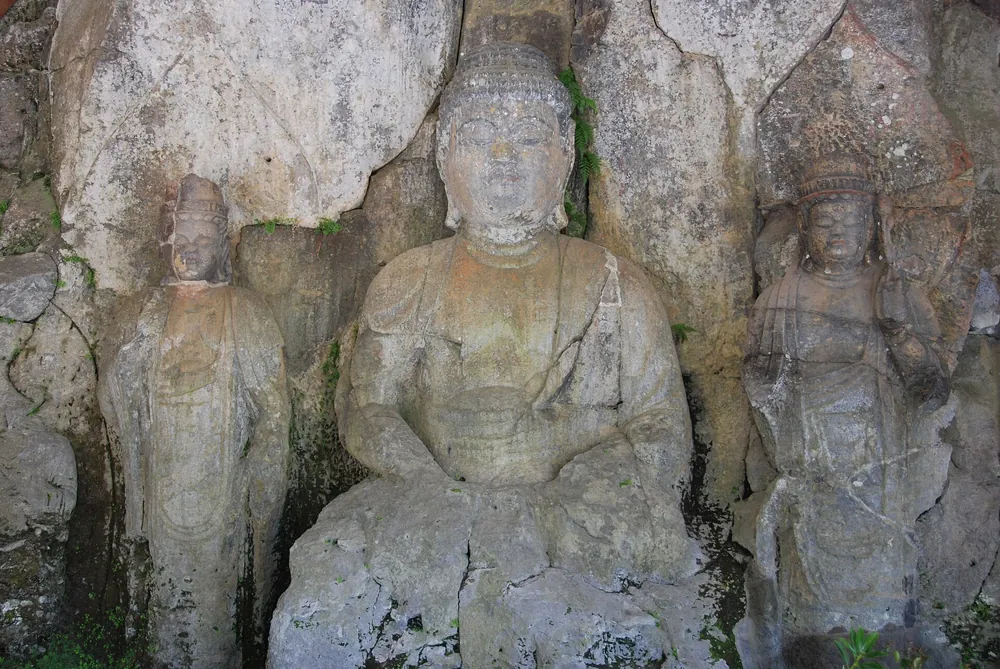
- Hours: 9:00 to 17:00, last entry 16:30, every day of the year. Older listings give different hours; the official site says 9:00 to 17:00 (Usuki Stone Buddhas).
- Fee: ¥550 for adults, ¥270 for children (Usuki Stone Buddhas, access).
- Getting there: about 35 minutes from Ōita to Usuki by limited express on the JR Nippō Line, then an Ōita Bus to the Usuki Sekibutsu stop in about 20 minutes for ¥200. A direct bus from Ōita Station takes about 1 hour 10 minutes (Usuki Stone Buddhas, access).
Our five days in Kyushu spends two nights in Beppu, so Usuki is an easy addition from there. The Buddhas are listed among the National Treasures of Kyushu.
Obi, Miyazaki: the "Little Kyoto of Kyushu"
Obi was the castle town of the Obi domain for about 280 years from 1588, and its stone walls, samurai houses and the Ōtemon gate of the castle earned it the name "the Little Kyoto of Kyushu" (Miyazaki Prefecture tourism).
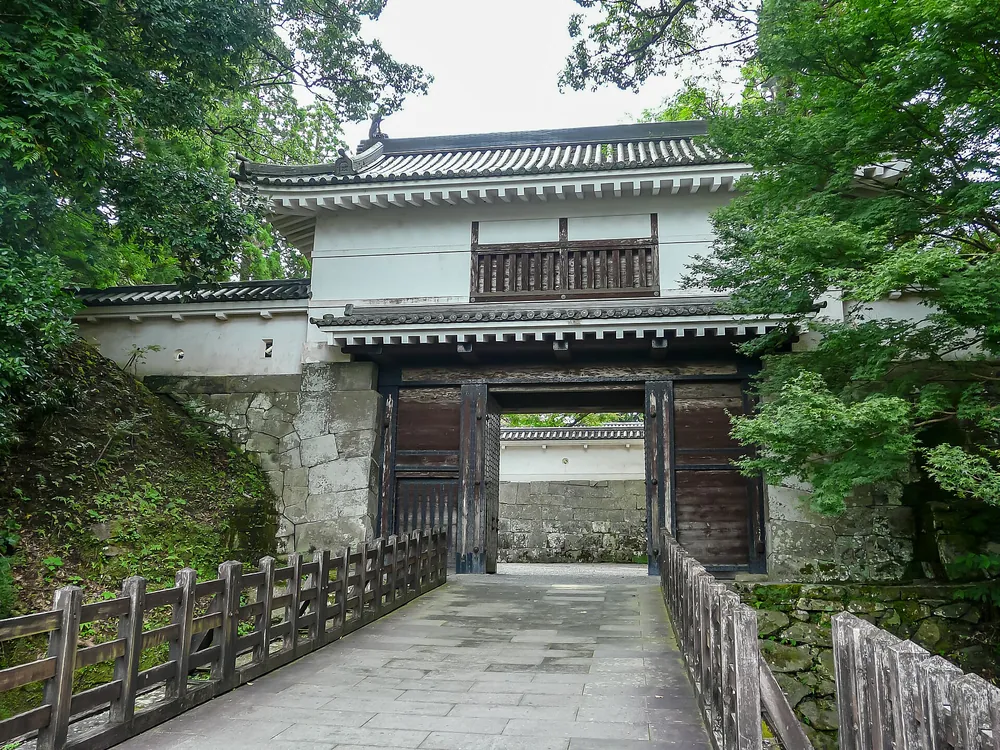
- Fees: ¥300 for each of the town's six paid sights, or ¥800 for all six. The ¥1,600 "Ayumi-chan Map" adds five vouchers for food and souvenirs in town (Obi castle town preservation society; Ayumi-chan Map).
- Getting there: JR Obi Station on the Nichinan Line is a 15- to 20-minute walk from the castle (Obi preservation society; Miyazaki Prefecture tourism). Miyazaki Kōtsū buses from Miyazaki Station take about 2 hours 10 minutes (Miyazaki Prefecture tourism).
- By sightseeing train: on the days it runs, JR Kyushu's Umisachi Yamasachi leaves Miyazaki at 9:43 and reaches Obi at 11:09 (JR Kyushu).
Check the Nichinan Line timetable before you go. Michiplan estimates JR rides rather than reading JR Kyushu's timetable, so treat its times for this line as approximate. Obi Castle is on the 100 Fine Castles list in Kyushu.
How to find your own quiet places in Michiplan
The nine places above are a start. Michiplan's Explore lists places to see in all 47 prefectures, and is built for this kind of search:
- Pick an area. Narrow to a region such as Tohoku or Shikoku, or to a single prefecture.
- Pick a famous list. Japan has lists for almost everything, and Explore carries 84 of them from Wikidata, from the 100 Fine Castles to Japan's Top 100 Waterfalls, along with World Heritage sites and National Treasures. A list shows only the places Explore could match to it, so a list of 100 may show fewer.
- Read the popularity label. Each place is marked from "Little known" to "Most popular". The label is estimated from how many language editions of Wikipedia cover the place, its Wikivoyage listings and the type of place, not from visitor numbers, so treat it as a hint rather than a crowd forecast.
- Turn on "No car needed". It keeps only places within walking distance of a station, a bus stop or a ferry pier. Each place shows the nearest station within 2 km, or the nearest bus stop within 500 m, with the walk in minutes.
Add the places you like to a trip, give it dates, and the planner puts them in days around their opening hours. Where a local bus company or town publishes its timetable as open data, as Gujō City and Kumano Gobo Nankai Bus do, Michiplan times the ride from those departures on your dates. Where no timetable is published, as with JR trains, Michiplan estimates the ride and labels it as an estimate.
Frequently asked questions
Can I see these places without a car?
Yes. Every place in this guide has a station or bus stop within walking distance, and the sections above give the bus from the nearest station. The catch is frequency: buses to Matsumae, Iwami Ginzan and Nachi run every hour or so at best, so plan your day around the bus back.
Which of these work as a day trip?
Yamadera is about 20 minutes from Yamagata and 50 from Sendai by train, and Usuki is about 35 minutes from Ōita, so both are easy day trips. Nachi Falls is about four hours from Osaka, and Matsumae is about 90 minutes by bus from the Shinkansen at Kikonai, so plan a night near either.
Is anything closed at the moment?
As of 5 November 2026, Uchiko-za is closed for repairs until about spring 2029; Matsumae Castle is open until 10 December, then closed until 10 April; and Gujō Hachiman Castle is closed from 20 December to 10 January. Check each place's own website before you go.
About this guide
The Michiplan team researched this guide from the places' own websites, the prefectures and cities that run them, the railway and bus operators and JNTO, and checked every fact against those pages on 5 November 2026. We have not visited these places for this guide; nothing here is a first-hand account. Hours, fees and bus times change, so check before you travel. Our sources page explains where Michiplan's data comes from, and you can report a mistake to hello@michiplan.com. See also our privacy policy and terms.
Sources
Places, all retrieved 2026-11-05:
- Risshaku-ji, official site; Yamadera Tourism Association, home and access; Visit Yamagata, Yamadera
- Hokkaido Tourism Organization, Matsumae Castle; Matsumae Tourism Association, Matsumae Castle
- Gujō Hachiman Castle, guide and home; Gujō Hachiman Industry Promotion Foundation, home, by rail and by bus; Ministry of the Environment, Gujō Hachiman case study; Gifu Prefecture tourism, Gujō Odori
- Kumano Nachi Taisha, the waterfall; Wakayama Prefecture, Nachi Falls
- Matsue Castle, visitor guide; Visit Matsue, Matsue Castle; Horikawa Sightseeing Boat, English guide
- UNESCO, Iwami Ginzan Silver Mine; Iwami Ginzan Mirai Consortium, Ryūgenji Mabu; Ōda City Tourism Association, getting around
- Ōzu Castle, home and guide; Visit Ehime, Ōzu Castle and Garyū Sansō; Uchiko Town, Uchiko-za; JNTO, Uchiko-za (Hong Kong edition)
- Usuki Stone Buddhas, official site and access; Usuki City, home
- Miyazaki Prefecture tourism, Obi castle town; Obi castle town preservation society, fees, Ayumi-chan Map and access
Trains and buses, all retrieved 2026-11-05:
- JNTO, Matsumae and Matsumae Park
- Gifu Bus, Gifu to Gujō Hachiman
- Kumano Gobo Nankai Bus, Nachisan line and fare application, 21 October 2026; Nankai, 2023 fares
- JR West, Kuroshio 1 and Yakumo 1
- Matsue City Transport, Lake Line timetable and fares from April 2026
- Ōda City Tourism Association, JR and bus timetable; Hiroshima City, Iwami Ginzan-go highway bus
- Uchiko tourism association, access
- JR Kyushu, Umisachi Yamasachi
Photos, via Wikimedia Commons:
- Cover: the view from Yamadera's Godaidō, by Raita Futo, CC BY 2.0, source, cropped.
- Matsumae Castle, by MaedaAkihiko, CC0, source.
- Gujō Hachiman, by Roniius, CC BY 3.0, source.
- Nachi Falls, by Zairon, CC BY 4.0, source.
- Matsue Castle, by 663highland, CC BY 2.5, source.
- Ōmori, Iwami Ginzan, by 663highland, CC BY-SA 4.0, source.
- Ōzu Castle, by Saigen Jiro, CC0, source.
- Usuki Stone Buddhas, by Maarten Heerlien, CC BY 2.0, source.
- Ōtemon gate, Obi, by Naokijp, CC BY-SA 4.0, source.


Find your own quiet places
Browse places in all 47 prefectures by area, famous list and how well known they are, keep only those within walking distance of a station or bus stop, and add them to a trip.
Explore the 100 Fine Castles